When was the last altseason?

When people ask "When was the last altseason?", they're usually trying to understand what happened in the most recent period when altcoins dramatically outperformed Bitcoin, and what lessons that experience offers for recognizing and navigating future altseasons.
The last major altseason occurred in 2021, specifically between January and May of that year. During this period, Bitcoin dominance fell from around 73% to as low as 39%, while altcoins across multiple sectors saw explosive rallies that created some of the most memorable moments in crypto history.
This article revisits:
- Previous altseasons and their timing relative to Bitcoin halvings
- What marked the last altseason in 2021
- How to recognize when an altseason is ending
- Lessons from the last altseason and what might be different next time
Previous altseasons: 2018 and 2021
Looking back at Bitcoin's history, altseasons have followed a pattern relative to halving events and Bitcoin's bull market cycles.
The 2018 altseason
The 2018 altseason emerged several months after the 2016 halving, following Bitcoin's peak in December 2017. During this period, altcoins like Ethereum, Ripple, Litecoin, and numerous smaller projects saw massive rallies. Many altcoins gained 10x, 50x, or even 100x in a matter of months as capital rotated from Bitcoin into the broader altcoin market.
This altseason was characterized by the ICO boom, where new projects raised billions through initial coin offerings. The narrative was about "the next Bitcoin" and blockchain technology disrupting traditional industries. While many of these projects eventually failed, the period created significant wealth for early participants and established patterns that would repeat in later cycles.
The 2021 altseason
The most recent major altseason occurred in 2021, following the May 2020 halving. This altseason had two distinct phases: an initial surge in early 2021, and a second wave in the spring and early summer of that year. The timing followed the typical pattern of emerging 6–9 months after the halving, when Bitcoin had reached new highs and entered a consolidation phase.
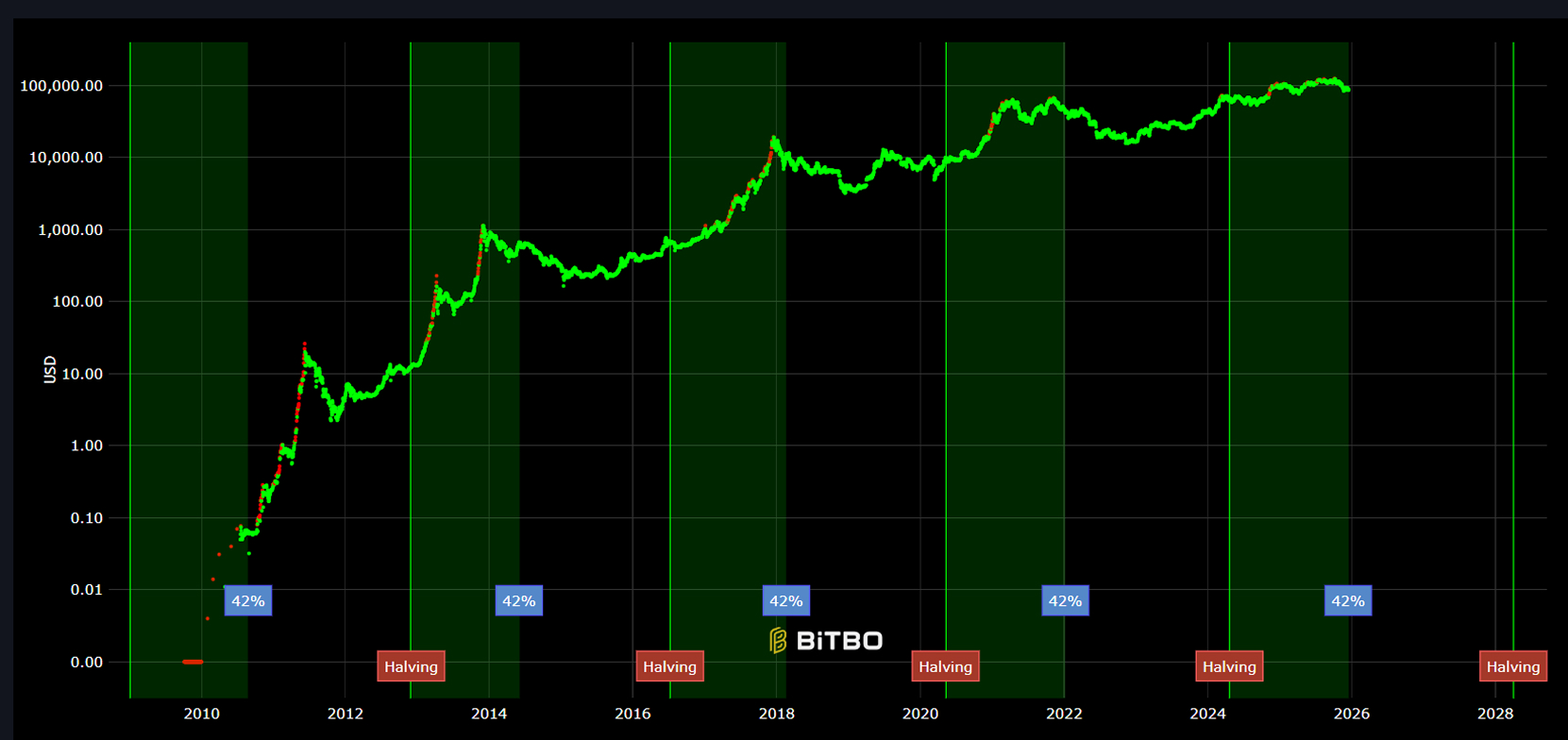
During this period, Bitcoin dominance fell from around 73% to as low as 39%, representing one of the most extreme capital rotations in crypto history. The altseason wasn't just about price appreciation. It was about new narratives, technologies, and use cases capturing investor imagination in ways that hadn't been seen before.
What made the 2021 altseason particularly notable was its breadth. Unlike previous cycles where rotation was more limited, the 2021 altseason saw rallies across multiple sectors simultaneously: DeFi protocols, NFT projects, metaverse tokens, layer-1 blockchains, and meme coins all participated in the broader rotation.
What marked the last altseason
The 2021 altseason was defined by several distinct characteristics that set it apart from previous cycles.
DeFi explosion
Decentralized finance (DeFi) was the dominant narrative of the 2021 altseason. Projects like Uniswap, Aave, Compound, and Curve saw their tokens surge as investors discovered yield farming, liquidity provision, and decentralized lending. The total value locked (TVL) in DeFi protocols grew from around $20 billion at the start of 2021 to over $100 billion by May, creating massive wealth for early participants.
DeFi tokens weren't just appreciating. They were creating new economic models where holding tokens provided governance rights, yield opportunities, and exposure to protocol revenue. This "tokenomics" narrative became central to the altseason, with investors evaluating projects based on their token distribution, staking rewards, and revenue-sharing mechanisms.
NFT mania
Non-fungible tokens (NFTs) exploded during the 2021 altseason, creating a cultural moment that extended beyond crypto-native circles. Projects like CryptoPunks, Bored Ape Yacht Club, and Art Blocks saw floor prices reach hundreds of thousands or even millions of dollars. The NFT narrative wasn't just about digital art. It expanded to include virtual land, gaming assets, and profile pictures that became status symbols.
This created a feedback loop where NFT success drove interest in the underlying blockchain platforms (primarily Ethereum, but also Solana and others), which in turn drove altcoin prices higher. The NFT boom also introduced a new class of retail investors to crypto, many of whom had never bought Bitcoin but were drawn in by the cultural phenomenon of digital collectibles.
Metaverse and virtual worlds
The metaverse narrative gained traction during the 2021 altseason, with projects like Decentraland, The Sandbox, and Axie Infinity seeing massive rallies. The idea that virtual worlds would become the next internet frontier captured investor imagination, driving valuations for metaverse tokens to extreme levels.
This narrative was amplified by major tech companies announcing metaverse initiatives, creating a sense that crypto was at the forefront of a major technological shift. Virtual land sales reached millions of dollars, and gaming tokens became some of the best performers of the altseason.
Small-cap rally
Perhaps the most characteristic feature of the 2021 altseason was the broad-based rally in small-cap altcoins. While major altcoins like Ethereum, Binance Coin, and Solana saw significant gains, the real action was in smaller projects that gained 50x, 100x, or even 1000x in a matter of weeks.
This created a "fear of missing out" (FOMO) dynamic where investors felt pressure to buy anything that was moving, regardless of fundamentals. Social media platforms like Twitter and Reddit became echo chambers amplifying price movements, with communities forming around specific tokens and creating viral moments that drove further buying.
Meme coin explosion
The 2021 altseason also saw the rise of meme coins to unprecedented levels. Dogecoin, which started as a joke, reached a market cap of nearly $100 billion at its peak in May 2021. Shiba Inu followed, creating a new category of "dog coins" that captured retail attention. These projects had no real utility or technology, but they became symbols of the retail-driven speculation that characterized the altseason's peak.
How to recognize when an altseason is ending
Altseasons don't end suddenly. They typically show warning signs before the broader market rotation reverses. Understanding these signals helps you recognize when the environment is shifting from "altcoins outperforming" to "risk-off consolidation."
Extreme FOMO and saturation
One of the clearest signs that an altseason is nearing its end is when FOMO reaches extreme levels. This shows up in several ways:
- Every new project or token launch immediately pumps, regardless of fundamentals
- Social media becomes dominated by price predictions and "to the moon" rhetoric
- Retail investors who previously avoided crypto start asking friends for altcoin recommendations
- Mainstream media coverage shifts from "Bitcoin is digital gold" to "altcoins are the future"
When this level of saturation occurs, it often means that most of the capital that's going to rotate into altcoins has already done so. The market becomes vulnerable because new buyers are harder to find, and existing holders start taking profits.
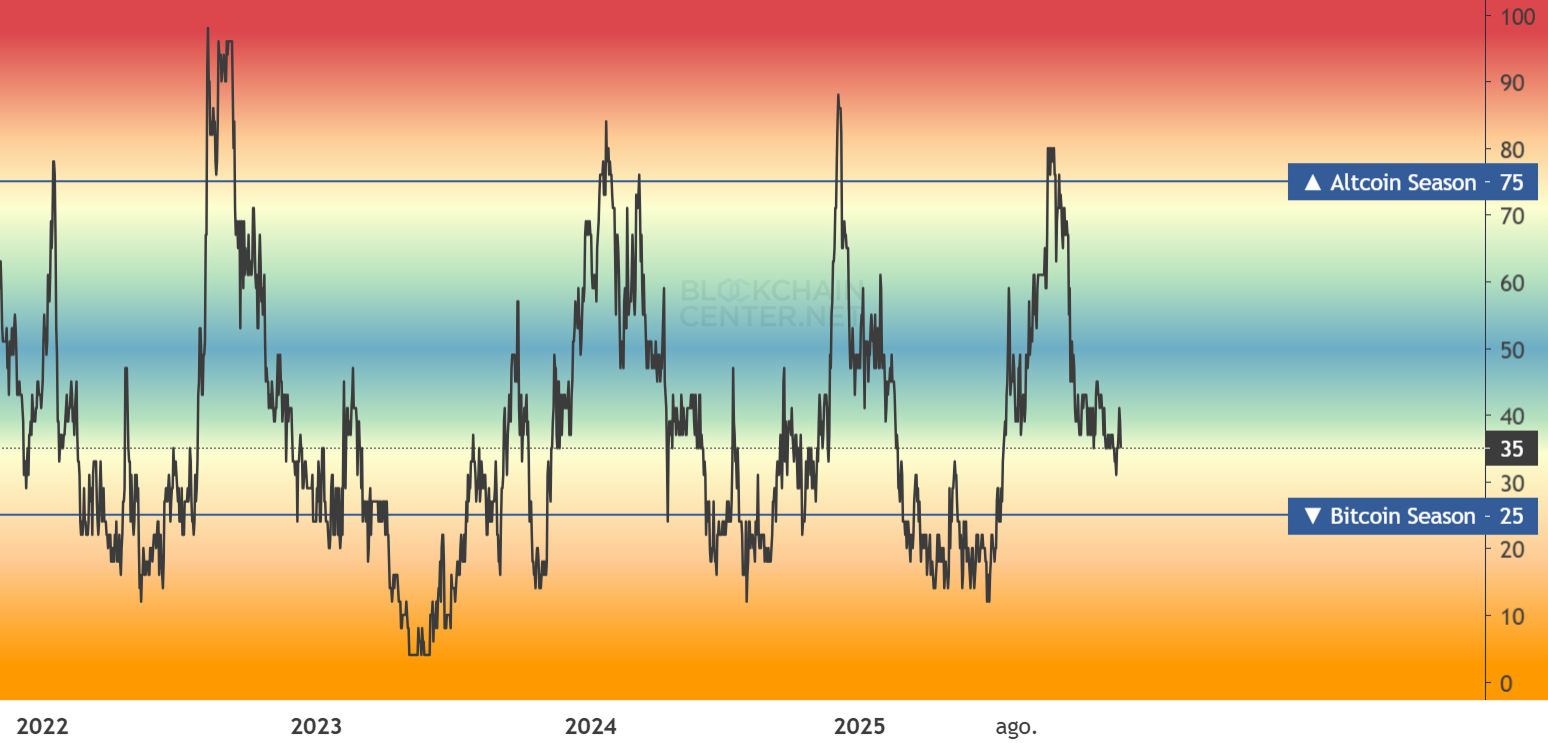
Altcoin Season Index above 75% for extended periods
The Altcoin Season Index measures how many of the top 50 altcoins are outperforming Bitcoin over a 90-day window. When this index stays above 75% for three months or longer, it often signals that the altseason has reached an extreme phase. This metric is part of the broader framework for understanding how altseason works, which tracks rotation through multiple phases from early signals to peak euphoria.
This doesn't mean the altseason ends immediately, but it suggests that the rotation has become so broad that it's running out of room to expand further. Historically, when the index has remained elevated for extended periods, it's often been followed by a reversal where Bitcoin dominance recovers and altcoins correct.
Bitcoin dominance finding support
Even during strong altseasons, Bitcoin dominance typically finds a floor. When dominance stops falling and begins to stabilize or recover, it can signal that capital rotation is exhausting itself. This doesn't happen overnight, but a sustained recovery in Bitcoin dominance, combined with altcoin prices starting to underperform, often marks the transition from altseason to consolidation.
Derivatives showing extreme positioning
When altcoin funding rates become extremely positive for extended periods, and open interest in altcoin futures reaches elevated levels, it suggests that leverage has become stretched. This creates vulnerability to deleveraging events, where a small correction can trigger cascading liquidations that accelerate the altseason's end.
Similarly, when the ratio of altcoin futures open interest to Bitcoin futures open interest reaches extreme levels, it often signals that speculative positioning has become too one-sided, creating conditions for a reversal.
Narrative exhaustion
Altseasons are driven by narratives that capture investor imagination. When those narratives start to feel exhausted, it can signal that the altseason is losing momentum. This shows up when:
- New projects struggle to gain traction even with strong fundamentals
- Existing narratives (like DeFi or NFTs) stop generating new excitement
- The market becomes dominated by copycat projects rather than innovation
- Media coverage shifts from "this is revolutionary" to "is this a bubble?"
The subsequent meltdown
Altseasons typically end with a sharp correction, often more severe than the corrections that occur during Bitcoin-led bull markets. This happens because:
- Altcoins have higher volatility than Bitcoin
- Many altcoin holders are less experienced and more likely to panic sell
- Leverage in altcoin markets amplifies downside moves
- Capital rotates back to Bitcoin as a "safe haven" during uncertainty
The correction often happens in phases: first a sharp drop, then a brief recovery attempt, then a deeper decline as confidence erodes. This pattern can take weeks or months to play out, and many altcoins never recover to their altseason highs.
Lessons from the last altseason
Each altseason brings new technologies, narratives, and market dynamics. Understanding what made 2021 unique helps you recognize what might be different in future cycles.
New technologies drive each cycle
The 2017–2018 altseason was dominated by ICOs and the idea that blockchain could disrupt any industry. The 2021 altseason was driven by DeFi, NFTs, and metaverse narratives. Each cycle brings new technologies that capture investor attention and create new categories of winners.
Looking ahead, potential narratives for future altseasons might include:
- BRC-20 tokens and Bitcoin-based DeFi, bringing financial applications to Bitcoin's network
- Real-world assets (RWA) tokenization, where traditional assets like real estate or commodities are represented on-chain
- AI tokens and projects that combine artificial intelligence with blockchain technology
- Layer-2 solutions and scaling technologies that make blockchain more practical for everyday use
The key lesson is that each altseason tends to focus on technologies that didn't exist or weren't mature in the previous cycle. Projects that solve new problems or create new use cases tend to outperform those that simply copy previous cycles' winners.
Breadth matters more than individual winners
The 2021 altseason showed that broad-based rotation creates more sustainable rallies than narrow sector focus. When multiple sectors participate simultaneously, it creates a self-reinforcing cycle where success in one area drives interest in others.
This suggests that future altseasons might be more sustainable if they involve multiple narratives rather than a single dominant theme. Monitoring market breadth through indicators like the Altcoin Season Index or the percentage of altcoins outperforming Bitcoin helps you understand whether rotation is healthy or becoming too narrow.
Retail participation amplifies moves
The 2021 altseason was notable for its retail participation, driven by social media, meme coins, and easy access through platforms like Coinbase and Binance. This retail participation created volatility and FOMO that amplified both the upside and the eventual correction.
Future altseasons might see different dynamics if institutional participation increases, potentially creating more measured moves but also more sustained trends. Understanding the mix of retail vs. institutional participation helps you gauge how extreme moves might become.
Timing relative to Bitcoin cycles matters
The 2021 altseason occurred during Bitcoin's bull market, when risk appetite was high and capital was abundant. Altseasons that occur during Bitcoin bear markets or consolidation phases tend to be shorter and less explosive.
This suggests that the best altseasons occur when Bitcoin has already made significant gains and entered a consolidation phase, allowing capital to rotate without Bitcoin's dominance creating headwinds. Monitoring Bitcoin's cycle position helps you understand whether conditions support a sustained altseason or just a brief rotation.
Tools for monitoring future cycles
Recognizing altseason signals and saturation points in real time requires monitoring multiple indicators simultaneously. Tools like HunchMachine's Altcoin Rotation Radar track capital flow across the crypto market, identifying whether the market is in a BTC-led phase, early ETH rotation, or entering altseason territory. The radar uses smoothed momentum trends in BTC dominance and ETH/BTC strength, combined with performance breadth of top altcoins, to classify the current rotational phase.
The Altcoin Appetite Index measures market appetite for altcoins by blending liquidity flow, Bitcoin dominance trends, and capital rotation signals. When this index moves above 0.6, it suggests strong appetite for altcoins and early altseason pressure. Conversely, when appetite scores drop while the Altcoin Season Index remains elevated, it can signal that saturation is building.
For detecting specific opportunities during altseasons, the Altcoin Opportunities Detector automation scans the market for short-term altcoin setups. It confirms when the market is in a bull regime, detects when altseason is active via the Altcoin Rotation Radar, and then identifies specific coins showing early strength, momentum, or recovery potential. This helps you focus on the strongest setups rather than trying to catch every moving altcoin.
Monitoring these indicators throughout an altseason helps you recognize when rotation is healthy versus when it's becoming exhausted. Early signals of saturation often appear in the data before they're obvious in price action, giving you time to adjust positioning before the broader correction begins.
So… when was the last altseason?
The last major altseason occurred in 2021, specifically between January and May of that year. During this period, Bitcoin dominance fell from around 73% to as low as 39%, while altcoins across DeFi, NFTs, metaverse, and meme coin sectors saw explosive rallies.
What made the 2021 altseason memorable wasn't just the price appreciation. It was the emergence of new narratives and technologies that hadn't existed in previous cycles, creating a sense that crypto was entering a new phase of adoption and innovation.
The altseason ended with the typical pattern: extreme FOMO, extended periods where the Altcoin Season Index stayed above 75%, and then a sharp correction as leverage unwound and capital rotated back to Bitcoin.
Looking ahead, future altseasons will likely bring new technologies and narratives that don't exist today. BRC-20 tokens, RWA tokenization, AI-blockchain projects, and new scaling solutions could drive the next cycle. But the underlying dynamics will probably remain similar: capital rotation from Bitcoin to altcoins, driven by new use cases and retail participation, followed by saturation and correction. Understanding what triggers altseason helps you recognize when these conditions are aligning.
The key is recognizing these patterns in real time rather than trying to predict exact dates. Tools that monitor rotation signals, market breadth, and saturation indicators help you understand when conditions are shifting, allowing you to position accordingly rather than reacting after the fact.
The question "When was the last altseason?" stops being about finding a historical date and becomes: "How do I recognize when the next altseason is forming, and what signals will tell me when it's reaching exhaustion?"
Monitor the indicators, understand the narratives, and adjust your positioning as rotation signals accumulate. Altseasons are powerful but temporary. Your job is to recognize them as they form and exit before they exhaust themselves.