Crypto for long term investment: Building a multi-year portfolio

When people ask about crypto for long term investment, they're usually trying to understand how to build a cryptocurrency portfolio that can grow over multiple years, survive market cycles, and potentially deliver significant returns while managing risk.
Long-term cryptocurrency investing is fundamentally different from short-term trading. It requires patience, conviction, and a strategy that can withstand 70-85% drawdowns that are common in crypto markets. Bitcoin has experienced three major bear markets: a 83% decline from $1,150 to $200 in 2013-2015, a 84% decline from $20,000 to $3,200 in 2017-2018, and a 77% decline from $69,000 to $16,000 in 2021-2022. Each time, Bitcoin eventually recovered and reached new all-time highs, as shown in historical price charts. But for investors who understand Bitcoin's cycles, believe in blockchain technology's long-term potential, and can handle volatility, cryptocurrency can be a powerful addition to a diversified portfolio.
This guide covers everything you need to know about crypto for long term investment:
- What makes cryptocurrency suitable for long-term holding
- How long-term investing differs from short-term trading
- Criteria for selecting long-term crypto assets
- Core holdings that should anchor your portfolio
- Growth candidates with strong fundamentals
- Portfolio construction strategies for different risk profiles
- Entry and accumulation strategies over time
- Risk management across multi-year cycles
- Storage and security for long-term holdings
- Long-term trends to watch
What makes crypto suitable for long-term investment
Cryptocurrency has several characteristics that make it potentially suitable for long-term investment, though these same characteristics also create significant risks.
Scarcity and fixed supply
Many cryptocurrencies, including Bitcoin, have fixed or predictable maximum supplies. Bitcoin will never exceed 21 million coins. This creates scarcity similar to precious metals, which can support long-term value appreciation as adoption grows. Unlike fiat currencies that can be printed indefinitely, cryptocurrencies with fixed supplies can't be debased by monetary policy. Bitcoin's supply schedule is predictable: approximately 19.7 million Bitcoin have been mined as of 2024, with the remaining coins to be issued over the next 120 years through mining rewards that halve every four years, as tracked by Bitcoin supply metrics.
Network effects and adoption
Cryptocurrency networks become more valuable as more people use them. Bitcoin's network has grown from a few early adopters to millions of users, thousands of businesses, and major institutional investors. The number of Bitcoin addresses holding at least 0.01 BTC has grown from thousands in 2010 to millions today. This network effect creates a moat that strengthens over time. The more people use a cryptocurrency, the more valuable it becomes, which attracts more users in a positive feedback loop.
Technological innovation
Blockchain technology enables new use cases that weren't possible before. Smart contracts, decentralized finance, and programmable money are still in early stages. Long-term investors who believe these technologies will transform industries can position themselves early. However, this also means investing in unproven technology with uncertain outcomes.
Institutional adoption
Major corporations, investment funds, and even countries have begun holding cryptocurrency. Bank of America expanded crypto access for wealth management clients in 2025. More than half of hedge funds now invest in crypto according to global surveys. This institutional adoption legitimizes cryptocurrency as an asset class and creates sustained demand.
Low correlation with traditional assets
Over longer timeframes, cryptocurrency has shown low correlation with stocks, bonds, and other traditional assets. This makes it useful for portfolio diversification. When traditional markets decline, cryptocurrency doesn't always follow, and vice versa. This diversification benefit can improve risk-adjusted returns over long periods.
24/7 global market
Cryptocurrency markets operate continuously, providing liquidity and access regardless of time zone or market hours. This global, always-on nature supports long-term adoption and makes cryptocurrency accessible to investors worldwide.
However, significant risks exist:
Cryptocurrency is highly volatile, with drawdowns of 70-85% from cycle peaks being common. Regulatory uncertainty persists. Technology risks include bugs, hacks, or fundamental flaws. And there's no guarantee that any specific cryptocurrency will succeed long-term. Many projects fail completely.
Long-term vs short-term crypto investing
Understanding the difference between long-term and short-term cryptocurrency investing helps you choose the right approach for your goals and risk tolerance.
Long-term investing characteristics:
- Time horizon: 3-10+ years, often aligned with Bitcoin's 4-year halving cycles
- Strategy: Buy and hold through multiple market cycles, accumulating during bear markets
- Focus: Fundamentals, adoption trends, and network growth rather than daily price movements
- Risk management: Position sizing, diversification, and accepting volatility as normal
- Entry timing: Less critical because you're investing over years, not days
- Exit strategy: Based on cycle positioning, fundamental changes, or reaching financial goals
Short-term trading characteristics:
- Time horizon: Days, weeks, or months
- Strategy: Frequent buying and selling based on technical analysis, news, or momentum
- Focus: Price movements, chart patterns, and market sentiment
- Risk management: Stop losses, position sizing, and quick exits
- Entry timing: Critical because small price differences matter significantly
- Exit strategy: Based on profit targets, stop losses, or technical signals
Why long-term investing often works better:
Most cryptocurrency traders lose money because they struggle with timing, emotional decisions, and fees. Long-term investors avoid these pitfalls by holding through volatility and focusing on fundamentals. Bitcoin has delivered extraordinary returns over long periods despite extreme short-term volatility. Investors who held through multiple cycles have generally outperformed those who tried to time the market.
When short-term trading makes sense:
Short-term trading can work for experienced traders with time to monitor markets, strong technical analysis skills, and emotional discipline. But it requires significant time commitment and carries higher risk of losses. Most investors are better served by long-term strategies.
Hybrid approaches:
Some investors combine both approaches. They hold core positions long-term (80-90% of portfolio) and use a small portion for active trading or taking profits during cycle peaks. This provides stability from long-term holdings while allowing some active management.
Criteria for selecting long-term crypto assets
Not all cryptocurrencies are suitable for long-term investment. Many projects fail, and even successful technologies can see their tokens decline if adoption doesn't materialize. Here's how to evaluate potential long-term holdings.
Fundamentals and real-world utility
What to look for:
- Clear use case: Does the cryptocurrency solve a real problem? Is there actual demand for what it enables?
- Competitive advantage: What makes this project better than alternatives? Does it have network effects, better technology, or stronger partnerships?
- Adoption metrics: Are people actually using it? Look at transaction volume, active addresses, developer activity, and real-world applications.
- Token economics: Does the token have real utility within the ecosystem, or is it primarily speculative?
Red flags:
- Projects with vague promises and no working product
- Tokens that exist only for speculation without utility
- Projects that copy others without meaningful innovation
- Teams with no track record or credibility issues
Examples of strong fundamentals:
Bitcoin has clear utility as digital money and store of value. Ethereum enables smart contracts that power thousands of applications. These use cases have proven demand and growing adoption. Projects that solve real problems with working technology tend to perform better long-term than those based primarily on hype.
Developer activity and roadmap
What to look for:
- Active development: Regular code commits, updates, and improvements show the project is alive and evolving
- Developer community: Large, active developer communities indicate strong ecosystem support
- Clear roadmap: Transparent plans for future development show the team has vision and direction
- Delivered milestones: Projects that consistently deliver on promises build credibility
How to check:
Platforms like GitHub show code activity. Project websites and documentation reveal roadmaps. Developer conferences and community forums indicate engagement. Projects with declining developer activity or missed milestones are warning signs.
Why it matters:
Technology evolves rapidly. Projects that stop developing get left behind. Active development shows the team is committed to long-term success and adapting to market needs. Strong developer communities also create network effects that strengthen over time.
Token supply and incentive design
What to look for:
- Supply mechanism: Is supply fixed, predictable, or inflationary? Fixed supplies create scarcity. Predictable inflation can be acceptable if it's reasonable. Unpredictable or high inflation is problematic.
- Distribution: How are tokens distributed? Fair launches, reasonable team allocations, and broad distribution are positive. Concentrated ownership or large team allocations are red flags.
- Incentive alignment: Do token holders benefit from network growth? Are rewards distributed fairly? Good incentive design aligns token holder interests with network success.
Bitcoin's model:
Bitcoin has a fixed supply of 21 million, predictable issuance through halvings, and fair distribution through mining. This model has proven successful over 15+ years. Projects that copy this model or create reasonable variations often perform better than those with complex or unfair tokenomics.
Red flags:
- Unlimited or very high inflation rates
- Large portions allocated to team or insiders
- Complex tokenomics that are difficult to understand
- Tokens that don't provide real utility or governance rights
Core long-term holdings
Every long-term cryptocurrency portfolio should have a solid foundation of proven assets with strong fundamentals. These core holdings provide stability and exposure to the most established use cases.
Bitcoin as a long-term anchor
Why Bitcoin belongs in every long-term portfolio:
Bitcoin is the original cryptocurrency and remains the dominant store-of-value asset. It has the largest market capitalization, highest liquidity, most robust network security, and strongest brand recognition. Bitcoin has survived multiple market cycles, regulatory challenges, and technological criticisms over 15+ years.
Bitcoin's value proposition:
- Digital scarcity: Fixed supply of 21 million creates predictable scarcity. Approximately 19.7 million Bitcoin have been mined as of 2024, with the final Bitcoin expected to be mined around 2140.
- Network security: More computing power protects Bitcoin than any other cryptocurrency. Bitcoin's hash rate has grown from essentially zero in 2009 to over 500 exahashes per second in 2024, making it the most secure blockchain network in existence, as measured by network security metrics.
- Institutional adoption: Major corporations and countries hold Bitcoin as treasury reserves. MicroStrategy holds over 190,000 Bitcoin, and El Salvador became the first country to adopt Bitcoin as legal tender in 2021.
- Proven track record: Bitcoin has delivered extraordinary returns over long periods despite extreme volatility. From less than $0.01 in 2009 to peaks above $69,000 in 2021, Bitcoin has shown the potential for massive long-term appreciation.
- Store of value: Increasingly accepted as "digital gold" and hedge against currency debasement
Allocation considerations:
For conservative long-term investors, Bitcoin might represent 70-80% of crypto allocation. For moderate investors, 50-60% is common. Even aggressive investors typically hold 30-40% in Bitcoin as a foundation. Bitcoin's dominance and proven resilience make it the anchor that stabilizes portfolios during market downturns.
Long-term outlook:
Bitcoin's halving cycles create predictable supply shocks every four years. The first halving in 2012 reduced block rewards from 50 to 25 BTC. The 2016 halving reduced rewards to 12.5 BTC. The 2020 halving reduced rewards to 6.25 BTC. The most recent halving in April 2024 reduced rewards to 3.125 BTC. Each halving has historically preceded significant bull runs, though the timing and magnitude vary, as documented in Bitcoin halving history.
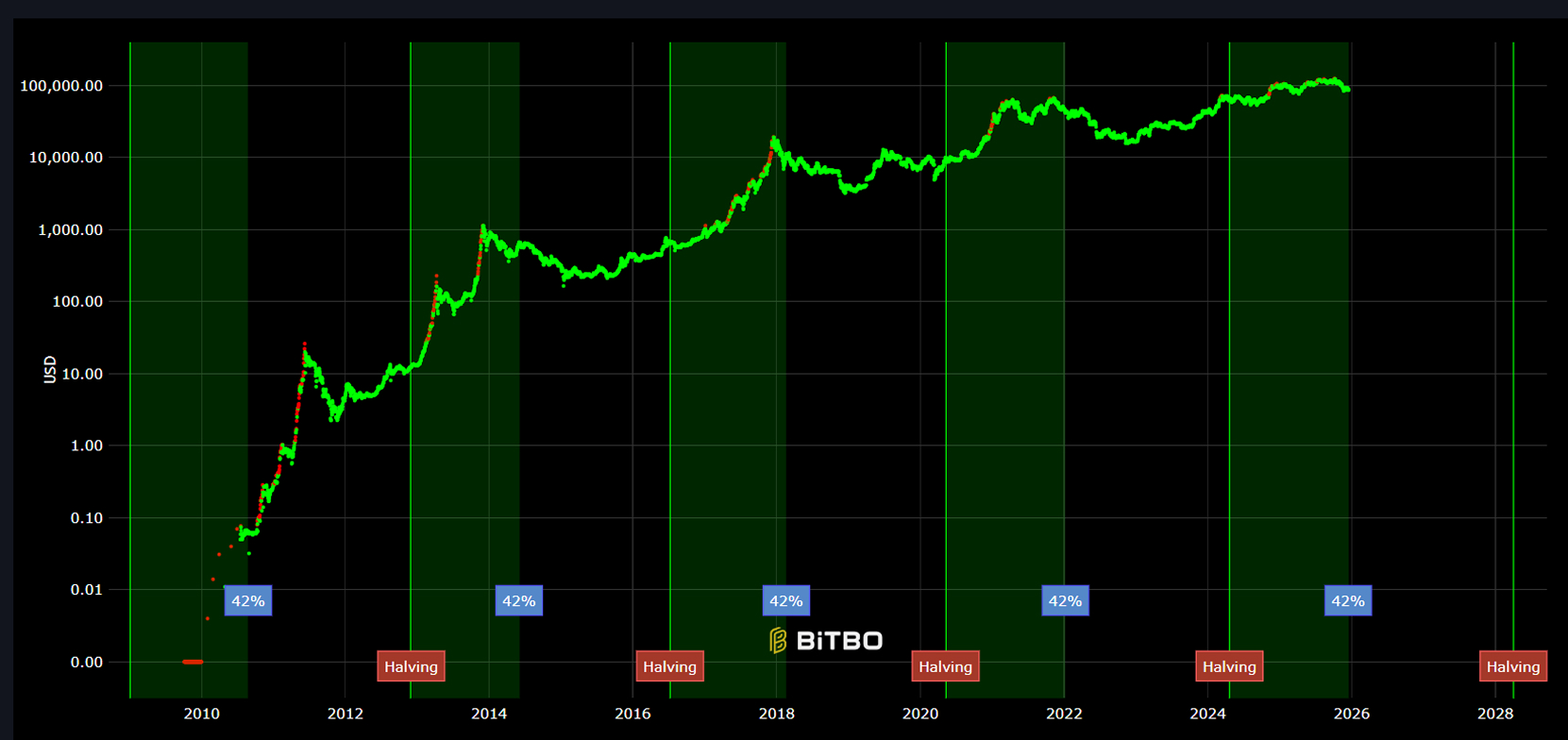
Institutional adoption continues growing. Regulatory clarity is improving in many jurisdictions. While volatility will persist, Bitcoin's fundamentals support long-term value appreciation as adoption continues.
Ethereum and platform ecosystems
Why Ethereum matters:
Ethereum is the largest smart-contract platform and powers most of the decentralized application ecosystem. It introduced programmable money through smart contracts, enabling DeFi, NFTs, and thousands of dApps. Ethereum has the largest developer community, most active ecosystem, and strongest network effects in the smart-contract space.
Ethereum's value proposition:
- Platform for innovation: Most new blockchain applications are built on Ethereum
- Network effects: More developers and users make Ethereum more valuable
- Proven technology: Ethereum has processed trillions in value and proven its security
- Ecosystem growth: DeFi, NFTs, and dApps continue growing on Ethereum
- Upgrade path: Ethereum 2.0 improvements address scalability and efficiency
Allocation considerations:
Ethereum typically represents 20-30% of crypto allocations for moderate investors. It offers exposure to blockchain technology's application layer beyond just store of value. However, it's more speculative than Bitcoin because it depends on ecosystem growth rather than just adoption as digital money.
Long-term outlook:
Ethereum faces competition from other smart-contract platforms, but its network effects and developer community provide significant advantages. If blockchain applications continue growing, Ethereum is well-positioned to capture value. However, technological improvements or competitive platforms could challenge its dominance.
Other platform considerations:
Platforms like Solana, Cardano, Avalanche, and Polygon compete with Ethereum by offering different trade-offs. Some investors allocate 5-10% to these alternatives for diversification and potential upside if they gain significant market share. However, Bitcoin and Ethereum should form the core foundation before adding smaller platforms.
High-conviction growth candidates
Beyond core holdings, some investors allocate smaller portions to projects with strong growth potential. These positions are more speculative but can provide significant upside if the projects succeed.
Scalability and infrastructure projects
What to look for:
Projects that solve blockchain's scalability limitations could see significant adoption if they deliver on promises. Look for projects with working technology, real usage, and clear competitive advantages.
Examples:
- Layer-2 solutions: Projects that scale Ethereum or Bitcoin by processing transactions off-chain
- Alternative L1s: Blockchains that compete with Ethereum by offering better speed or lower costs
- Infrastructure projects: Tools and services that make blockchain more usable for mainstream applications
Investment considerations:
These projects are higher risk because they're competing with established platforms. Many will fail. But those that succeed could deliver significant returns. Allocate only what you can afford to lose completely. Research thoroughly and understand the technology before investing.
Interoperability and data layers
What to look for:
Projects that enable different blockchains to communicate or that provide critical infrastructure for blockchain applications. These projects could become essential if multi-chain ecosystems continue growing.
Examples:
- Interoperability protocols: Enable value and data transfer between different blockchains
- Oracle networks: Provide real-world data to smart contracts
- Data availability layers: Enable cheaper and more efficient blockchain scaling
Investment considerations:
These projects depend on broader ecosystem growth. If blockchain adoption slows, demand for these services may not materialize. However, if multi-chain ecosystems become dominant, interoperability and data layers could be essential infrastructure. Research the specific use case and competitive landscape before investing.
Risk management:
High-conviction growth candidates should represent a small portion of your portfolio (10-20% maximum, often 5-10%). Diversify across multiple projects rather than concentrating in one. And be prepared for many of these positions to fail completely. Only invest what you can afford to lose.
Portfolio construction for long-term investors
How you allocate your cryptocurrency portfolio depends on your risk tolerance, time horizon, and investment goals. Here are practical allocation strategies.
Core vs satellite allocations
Core allocation (70-90%):
Your core should consist of proven assets with strong fundamentals: primarily Bitcoin, with Ethereum as a secondary core holding. These assets have the best risk-adjusted returns over long periods and provide stability during market downturns. For detailed guidance on building a diversified crypto portfolio that balances core holdings with growth opportunities, see our comprehensive guide on portfolio construction strategies.
Satellite allocation (10-30%):
Satellites are smaller positions in growth candidates, alternative platforms, or specific use cases you believe in. These positions offer higher potential returns but also higher risk. They can enhance returns if successful but shouldn't threaten your core portfolio if they fail.
Why this structure works:
The core provides stability and proven returns. Satellites offer upside potential without risking your foundation. If satellites fail, your core positions preserve capital. If satellites succeed, they enhance overall returns. This structure balances risk and reward effectively.
Example conservative, balanced, and growth portfolios
Conservative portfolio (low risk tolerance):
- 80% Bitcoin
- 15% Ethereum
- 5% Cash reserve for opportunities
This portfolio prioritizes stability and proven assets. It's suitable for investors who want crypto exposure but can't handle high volatility or want to minimize risk.
Balanced portfolio (moderate risk tolerance):
- 60% Bitcoin
- 25% Ethereum
- 10% Other established platforms (Solana, Cardano, etc.)
- 5% Growth candidates
This portfolio provides core stability while allowing some exposure to growth opportunities. It balances risk and reward for most long-term investors.
Growth portfolio (high risk tolerance):
- 40% Bitcoin
- 30% Ethereum
- 20% Other platforms and ecosystems
- 10% High-conviction growth candidates
This portfolio maximizes growth potential but accepts higher volatility and risk. Suitable for investors with long time horizons and high risk tolerance.
Adjusting over time:
As you gain experience and your financial situation changes, adjust your allocation. You might start conservative and become more comfortable with risk. Or reduce risk as you approach financial goals. The key is having a plan and sticking to it rather than reacting to market movements.
Entry and accumulation strategies
How and when you enter cryptocurrency positions matters less for long-term investors than for traders, but smart entry strategies can still improve returns.
Dollar-cost averaging
How it works:
Invest fixed amounts at regular intervals (weekly, monthly, quarterly) regardless of price. This approach automatically buys more when prices are low and less when prices are high, smoothing out volatility's impact. For a comprehensive guide on Dollar-Cost Averaging (DCA) in Crypto, including how to implement it, choose the right frequency, and understand its advantages and limitations, see our detailed article.
Why it works:
Dollar-cost averaging removes emotion from investment decisions. You're not trying to time the market. You're consistently accumulating regardless of short-term price movements. Over long periods, this approach typically outperforms trying to time entries.
Implementation:
Set up automatic purchases on your exchange. Choose an amount you can consistently afford. Set a schedule and stick to it. Review periodically (quarterly or annually) to adjust amounts if your financial situation changes, but avoid changing based on price movements.
Dynamic DCA:
Some investors use a hybrid approach where they increase purchases during market downturns and decrease during peaks. This requires understanding market cycles and indicators. Tools that provide cycle positioning and market structure analysis can help identify better accumulation periods without requiring you to become a technical analyst.
Buying during market drawdowns
The opportunity:
Cryptocurrency markets experience significant drawdowns regularly. Bitcoin has fallen 70-85% from cycle peaks multiple times. These drawdowns create opportunities for long-term investors to accumulate at lower prices.
How to identify opportunities:
- Cycle positioning: Understanding where Bitcoin sits in its 4-year halving cycle helps identify accumulation phases
- Sentiment extremes: When fear is extreme and most investors are selling, it's often a good time to buy
- Technical levels: Major support levels like the 200-week moving average have historically marked good accumulation zones
- Fundamental strength: If fundamentals remain strong but prices decline, it's often a buying opportunity
Implementation:
Maintain a cash reserve (10-20% of crypto allocation) for opportunities. When significant drawdowns occur and indicators suggest good value, deploy this reserve. Don't try to catch the exact bottom. Buying during drawdowns when indicators suggest accumulation phases is sufficient. Understanding how to crypto buy the dip responsibly, including identifying quality buying opportunities, preparing before dips occur, and managing risk, helps you turn market corrections into accumulation opportunities.
Avoiding common mistakes:
Don't deploy all cash at once. Spread purchases over weeks or months during drawdowns. And don't panic if prices continue declining after you buy. Long-term investors should expect volatility and focus on accumulating over years, not days.
Risk management over multi-year cycles
Long-term cryptocurrency investing requires managing risk across multiple market cycles. Here's how to protect your portfolio while maintaining exposure to growth.
Volatility tolerance and drawdown planning
Understanding volatility:
Cryptocurrency is extremely volatile. Bitcoin has experienced drawdowns of 70-85% from cycle peaks multiple times. These drawdowns are normal, not exceptions. Long-term investors must accept this volatility as part of the asset class.
Planning for drawdowns:
Before investing, honestly assess whether you can handle 50-80% portfolio declines without panicking and selling. If not, reduce your allocation or avoid cryptocurrency entirely. Selling during drawdowns locks in losses and prevents participation in recoveries.
Position sizing:
Never invest more than you can afford to lose completely. Most financial advisors recommend limiting cryptocurrency to 5-10% of total investment portfolios. Even within crypto allocation, don't concentrate too heavily in single assets. Diversification reduces the impact of individual asset failures.
Psychological preparation:
Understand that volatility is normal. Drawdowns will happen. Recoveries will follow. Long-term investors who hold through cycles typically see their patience rewarded. But this requires emotional discipline and financial capacity to wait through difficult periods.
When (and why) to rebalance
Rebalancing basics:
Rebalancing means adjusting your portfolio allocation to maintain target percentages. If Bitcoin grows to 90% of your crypto portfolio, selling some and reallocating to other assets maintains diversification.
When to rebalance:
- Periodic rebalancing: Review quarterly or annually and rebalance if allocations drift significantly from targets
- After major moves: If one asset grows dramatically, consider taking profits and rebalancing
- During cycle transitions: As cycles mature, consider reducing risk exposure and increasing cash or stable positions
Why rebalance:
Rebalancing enforces discipline. It forces you to sell high (take profits) and buy low (add to underperforming assets). This improves risk-adjusted returns over time. It also prevents over-concentration in single assets, which increases risk.
Rebalancing strategies:
- Threshold-based: Rebalance when any asset drifts more than 5-10% from target allocation
- Time-based: Rebalance on a fixed schedule regardless of drift
- Cycle-based: Adjust allocation based on cycle positioning (more aggressive in accumulation phases, more defensive near cycle tops)
Using indicators for rebalancing:
Understanding market cycles and indicators can inform rebalancing decisions. If cycle indicators suggest you're in late bull market phases, consider reducing exposure and increasing cash. If indicators suggest accumulation phases, consider increasing exposure. APIs that provide cycle positioning and market structure analysis can help inform these decisions without requiring deep technical analysis knowledge.
Avoiding over-trading:
Rebalancing should be infrequent (quarterly to annually). Don't rebalance based on daily or weekly price movements. Long-term investors benefit from patience, not frequent adjustments.
Storage, custody, and long-term security
Security is critical for long-term cryptocurrency holdings. Unlike traditional investments, cryptocurrency requires you to secure digital assets yourself. Mistakes can result in permanent loss.
Self-custody for long-term holdings
Hardware wallets:
Hardware wallets like Ledger and Trezor are the gold standard for long-term storage. They store private keys offline, protecting them from online threats. They're designed to last years and can survive even if your computer is compromised.
Best practices:
- Purchase hardware wallets directly from manufacturers, not third parties
- Set up wallets in secure, private locations
- Write down seed phrases on metal or other durable materials (not paper)
- Store seed phrase backups in multiple secure locations
- Test recovery process before storing significant amounts
- Keep firmware updated
Multi-signature setups:
For larger holdings, consider multi-signature wallets that require multiple keys to authorize transactions. This adds security but increases complexity. Suitable for experienced users with significant holdings.
Exchange custody considerations
When to use exchanges:
Exchanges are convenient for active trading and small amounts. But they're less secure than self-custody for long-term holdings. Use exchanges for trading, not storage.
Risks of exchange custody:
- Exchange hacks can result in total loss
- Regulatory issues can freeze or seize funds
- Exchange failures can result in permanent loss
- You don't control your private keys
Best practices if using exchanges:
- Use reputable, regulated exchanges with insurance
- Enable all security features (2FA, withdrawal whitelists, etc.)
- Keep only small amounts for trading
- Move long-term holdings to self-custody
- Diversify across multiple exchanges if holding larger amounts
Long-term security maintenance
Ongoing practices:
- Review security practices annually
- Update wallet software and firmware regularly
- Monitor for security news about your wallets or exchanges
- Test recovery processes periodically
- Update backup storage if needed
Estate planning:
Consider how heirs will access your cryptocurrency if something happens to you. Document wallet locations, seed phrase storage, and access procedures. Store this information securely and ensure trusted people know how to access it if needed. Consult legal and estate planning professionals familiar with cryptocurrency.
Long-term outlook and key trends to watch
Cryptocurrency is still in early stages of adoption. Understanding long-term trends helps you position your portfolio for potential future growth.
Institutional adoption
Current status:
Institutional adoption continues accelerating. Major corporations hold Bitcoin as treasury reserves. Investment funds allocate to cryptocurrency. Countries adopt or consider cryptocurrency for various uses. Bank of America expanded crypto access for wealth management clients. More than half of hedge funds now invest in crypto.
Why it matters:
Institutional adoption creates sustained demand, reduces volatility over time, and legitimizes cryptocurrency as an asset class. As more institutions allocate to crypto, prices could appreciate significantly. However, institutional adoption also brings regulatory scrutiny and potential restrictions.
What to watch:
- Corporate treasury allocations
- ETF flows and new product launches
- Central bank digital currency developments
- Regulatory clarity in major jurisdictions
Regulatory developments
Current landscape:
Regulation varies significantly by country. Some jurisdictions have clear, favorable regulations. Others have restrictions or bans. Most are still developing frameworks. Regulatory clarity generally supports adoption and price appreciation.
What to watch:
- Securities classification of various cryptocurrencies
- Tax treatment and reporting requirements
- Exchange and custody regulations
- International coordination on crypto regulation
Potential impacts:
Favorable regulation could accelerate adoption and increase prices. Unfavorable regulation could restrict access or reduce demand. Long-term investors should monitor regulatory developments but avoid overreacting to short-term regulatory news.
Technological innovation
Key areas:
- Scalability solutions: Layer-2 networks and alternative blockchains addressing transaction speed and cost
- Interoperability: Protocols enabling communication between different blockchains
- Privacy: Technologies improving transaction privacy while maintaining transparency
- Use case expansion: New applications beyond payments and DeFi
What to watch:
- Developer activity and code commits
- Real-world adoption of new technologies
- Competitive dynamics between platforms
- Breakthrough innovations that could disrupt existing leaders
Investment implications:
Technological innovation creates opportunities but also risks. New technologies could make existing cryptocurrencies obsolete. Or they could enhance existing platforms. Long-term investors should monitor innovation but focus on fundamentals rather than chasing every new technology.
Macro economic trends
Inflation and monetary policy:
Cryptocurrency, especially Bitcoin, is often viewed as a hedge against inflation and currency debasement. When central banks print money excessively or inflation rises, demand for fixed-supply assets like Bitcoin often increases.
What to watch:
- Central bank policies and money supply growth
- Inflation rates and expectations
- Currency debasement in major economies
- Shifts in monetary policy that could impact risk assets
Geopolitical factors:
Cryptocurrency can provide financial access in countries with unstable currencies or restricted financial systems. Geopolitical tensions and economic sanctions can increase demand for decentralized financial systems.
What to watch:
- Currency crises in major economies
- Geopolitical tensions affecting traditional finance
- Adoption in countries with unstable currencies
- Use of cryptocurrency to bypass financial restrictions
So… is crypto right for long-term investment?
Cryptocurrency can be a powerful long-term investment for investors who understand the risks, have appropriate risk tolerance, and can commit to holding through multiple market cycles.
Crypto for long term investment works if you:
- Have a long time horizon (5-10+ years)
- Can handle extreme volatility (50-80% drawdowns)
- Understand what you're investing in
- Have appropriate risk management (position sizing, diversification)
- Can secure your holdings properly
- Have emotional discipline to hold through difficult periods
Crypto for long term investment doesn't work if you:
- Need money in the short term
- Can't handle significant volatility
- Don't understand the technology or market
- Invest more than you can afford to lose
- Can't secure holdings properly
- Will panic sell during drawdowns
Getting started:
If you decide cryptocurrency fits your investment strategy, start by:
- Educating yourself about what you're buying and how markets work
- Starting small with amounts you can afford to lose
- Focusing on core holdings (Bitcoin, Ethereum) before exploring alternatives
- Using dollar-cost averaging to accumulate over time
- Securing holdings properly with hardware wallets for long-term storage
- Having a plan for allocation, rebalancing, and risk management
Using market intelligence:
Understanding market cycles, sentiment, and technical indicators can help you make better decisions about when to accumulate, when to hold, and when to take profits. Tools that provide pre-processed market data and cycle analysis can simplify this process by giving you interpreted insights rather than requiring you to analyze raw charts yourself.
But remember: no tool can eliminate risk or guarantee returns. The key to crypto for long term investment is building knowledge, managing risk appropriately, staying disciplined, and having patience to hold through multiple cycles. Cryptocurrency markets will remain volatile. But for investors with the right approach, long-term holding can potentially deliver significant returns while participating in transformative technology adoption.
The question "Is crypto right for long-term investment?" ultimately depends on your financial situation, risk tolerance, time horizon, and ability to manage the unique challenges cryptocurrency presents. If you proceed, do so with education, planning, realistic expectations, and appropriate risk management.