Crypto buy the dip: Turning market corrections into opportunities

When people search for crypto buy the dip, they're usually trying to understand how to take advantage of market corrections and turn volatility into buying opportunities.
"Buy the dip" is one of the most popular phrases in cryptocurrency investing, but it's also one of the most misunderstood. Buying during market dips can be profitable, but it requires preparation, discipline, and risk management. Simply buying whenever prices drop is a recipe for losses. Understanding what constitutes a "dip" worth buying, how to prepare, and how to execute responsibly helps you turn market volatility into opportunities rather than losses.
This guide covers everything you need to know about crypto buy the dip:
- What "buy the dip" means in cryptocurrency markets
- Understanding market dips and different types of corrections
- How to prepare before buying opportunities arise
- Responsible strategies for buying during dips
- Risk management when executing dip-buying strategies
- Common mistakes to avoid
- Turning volatility into long-term opportunities
What does "buy the dip" mean in crypto?
"Buy the dip" means purchasing cryptocurrency when prices have declined from recent highs, with the expectation that prices will recover and you'll profit from buying at lower levels.
The basic concept:
When cryptocurrency prices drop, some investors see it as a buying opportunity. Instead of panicking and selling, they buy more, believing that the decline is temporary and prices will eventually recover. This strategy works when you buy quality assets during temporary corrections rather than permanent declines.
Why it's popular in crypto:
Cryptocurrency markets are extremely volatile. Prices can drop 20-30% in days or weeks, then recover just as quickly. This volatility creates frequent "dip" opportunities. But it also creates risk, because not every dip is a buying opportunity. Some declines continue for months or years.
The challenge:
The difficulty is distinguishing between:
- Temporary corrections: Short-term declines that recover quickly
- Bear markets: Extended declines that can last months or years
- Asset failures: Permanent declines where assets never recover
Buying during temporary corrections can be profitable. Buying during bear markets requires patience and capital to wait for recovery. Buying failing assets results in permanent losses.
When "buy the dip" works:
- Quality assets (Bitcoin, Ethereum) during temporary corrections
- Market-wide selloffs that create buying opportunities
- Technical support levels that historically hold
- When fundamentals remain strong despite price declines
When "buy the dip" fails:
- Buying assets that are fundamentally broken
- Buying during extended bear markets without capital to wait
- Buying without understanding why prices declined
- Buying with leverage or money you can't afford to lose
The key insight:
Successful "buy the dip" strategies require understanding market structure, cycle positioning, and asset fundamentals. It's not about buying every decline. It's about identifying quality buying opportunities during temporary weakness.
Understanding market dips
Not all price declines are created equal. Understanding different types of dips helps you identify which ones are worth buying and which ones to avoid.
Corrections vs bear markets
Market corrections:
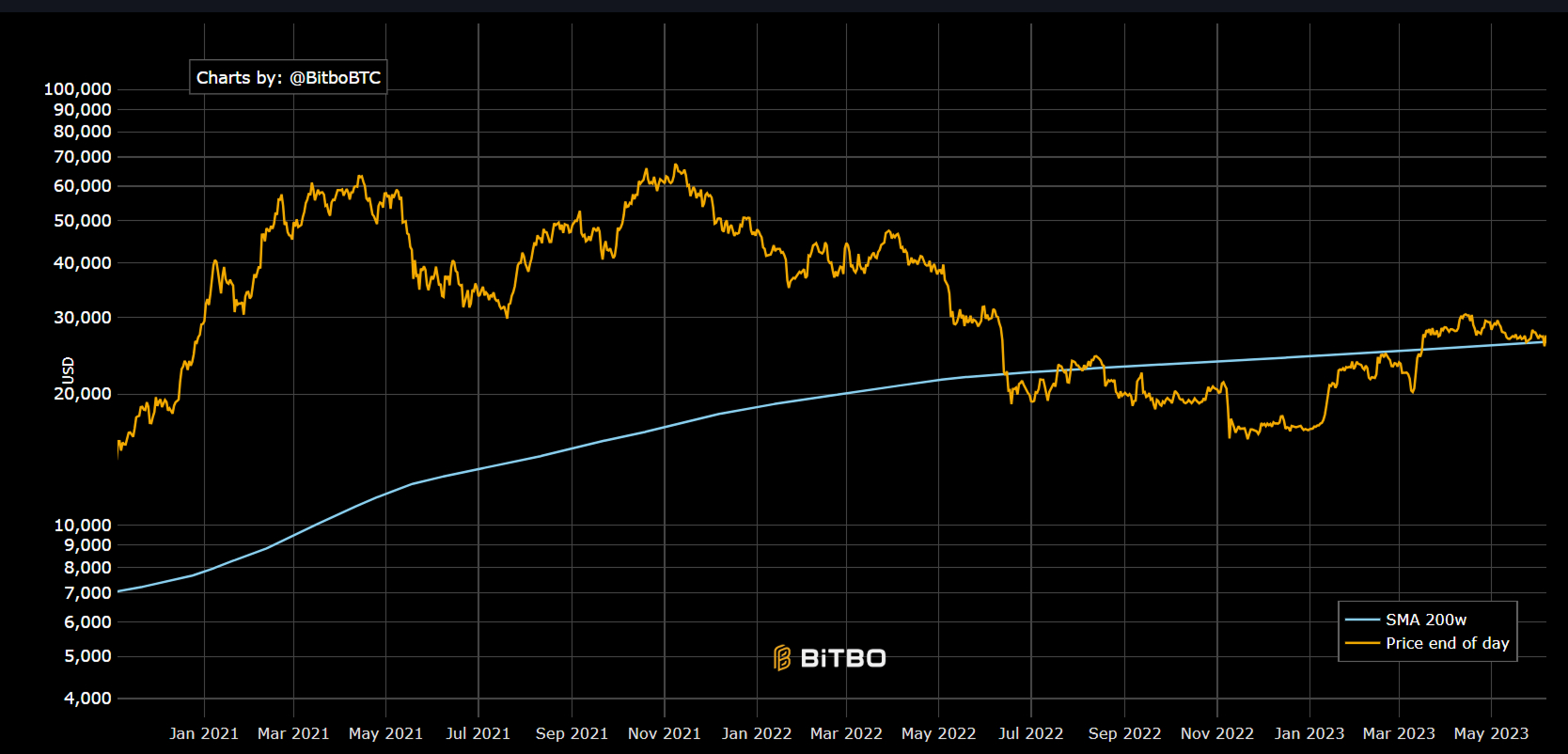
Corrections are short-term declines of 10-20% from recent highs. They're normal in healthy markets and often occur after strong rallies. Corrections typically last days to weeks and recover relatively quickly. They're caused by profit-taking, temporary negative news, or normal market volatility. During Bitcoin's 2020-2021 bull run, the market experienced multiple 20-30% corrections that recovered within weeks. For example, Bitcoin dropped from $64,000 to $30,000 (a 53% decline) in May 2021, then recovered to new highs above $69,000 by November 2021, as shown in historical price data.
Characteristics of corrections:
- Decline of 10-20% from recent highs
- Duration of days to weeks
- Recovery within weeks to months
- Often find support at key technical levels
- Fundamentals remain strong
Bear markets:
Bear markets are extended declines of 50% or more that last months or years. They represent fundamental shifts in market sentiment and often coincide with cycle transitions. Bear markets can last 1-2 years and require significant patience to wait for recovery. Bitcoin's 2018 bear market lasted 15 months from peak to bottom. The 2022 bear market lasted 12 months. Historical data shows that bear markets typically end when prices find support at the 200-week moving average, which has held as a major support level in every major bear market since 2014, as analyzed in technical analysis studies.
Characteristics of bear markets:
- Decline of 50%+ from cycle highs
- Duration of months to years
- Recovery takes significant time
- Often break through multiple support levels
- May involve fundamental concerns
How to distinguish:
Understanding where markets sit in cycles helps distinguish corrections from bear markets. If you're in the middle of a bull market cycle, a 20% decline is likely a correction. If you're near a cycle top with extreme valuations, a 20% decline might be the start of a bear market. Cycle indicators and market structure analysis can help identify which scenario you're in.
Buying strategy differences:
- Corrections: Can buy more aggressively, expecting quick recovery
- Bear markets: Buy more cautiously, scale in gradually, prepare for extended declines
The role of volatility in crypto cycles
Volatility is normal:
Cryptocurrency markets are inherently volatile. Bitcoin has experienced drawdowns of 30-50% multiple times during bull markets, only to recover and reach new highs. During the 2017 bull run, Bitcoin experienced a 40% correction from $5,000 to $3,000 in September 2017, then recovered to $20,000 by December. During the 2020-2021 bull run, Bitcoin dropped 53% from $64,000 to $30,000 in May 2021, then recovered to $69,000 by November. This volatility is normal, not exceptional, as shown in historical volatility data.
Cycle context matters:
Volatility behaves differently depending on cycle phase:
- Bull markets: Volatility creates buying opportunities during corrections
- Bear markets: Volatility creates selling pressure and extended declines
- Accumulation phases: Volatility is lower, prices consolidate
- Distribution phases: Volatility increases as markets top
Using volatility:
Understanding cycle positioning helps you interpret volatility. High volatility during bull market corrections can create buying opportunities. High volatility during bear markets suggests more decline ahead. Context matters more than the absolute level of volatility.
The opportunity:
For prepared investors, volatility creates opportunities. When others panic and sell during corrections, you can buy quality assets at discounted prices. But this requires:
- Understanding cycle positioning
- Maintaining capital reserves for opportunities
- Emotional discipline to buy when others are fearful
- Focus on quality assets with strong fundamentals
Preparing before buying the dip
Successful "buy the dip" strategies require preparation. You can't effectively buy dips if you're not ready when opportunities arise.
Market structure and cycle awareness
Understanding cycles:
Bitcoin and cryptocurrency markets move in cycles. Understanding where you are in the cycle helps you:
- Identify whether declines are corrections or bear market starts
- Determine appropriate buying strategies
- Set realistic expectations for recovery timeframes
- Manage risk based on cycle positioning
Cycle phases:
- Accumulation: Prices consolidate after bear markets, good for gradual accumulation
- Expansion: Bull markets with corrections, good for buying dips
- Distribution: Cycle tops with high volatility, be cautious buying dips
- Decline: Bear markets, buy very cautiously if at all
Using cycle indicators:
Tools that provide cycle positioning can help you understand market context. Knowing whether you're in accumulation, expansion, distribution, or decline phases informs your dip-buying strategy. In expansion phases, buying dips can be profitable. In distribution phases, buying dips is riskier.
Market structure:
Understanding market structure means recognizing:
- Whether markets are in uptrends or downtrends
- Key support and resistance levels
- Whether current prices are high or low relative to cycles
- Whether sentiment is extreme (fear or greed)
Why it matters:
Buying dips in uptrends (bull market corrections) is different from buying dips in downtrends (bear market declines). The former offers better risk-reward. The latter requires more patience and capital.
Technical indicators and support levels
Key support levels:
Support levels are prices where buying interest historically appears. Buying near support levels improves risk-reward because:
- Support often holds, limiting downside
- If support breaks, you know to exit
- Support levels provide clear risk management points
Important support levels for Bitcoin:
- 200-week moving average: Historically strong support during bear markets. Bitcoin found support at this level in 2015 ($200), 2018 ($3,200), and 2022 ($16,000). Each time, it marked a major accumulation zone before the next bull run, as documented in technical analysis.
- Previous cycle highs: Often act as support in new cycles. The 2017 peak of $20,000 acted as resistance-turned-support in 2020-2021.
- 50-week moving average: Medium-term trend support
- Psychological levels: Round numbers like $30,000, $40,000, etc.
Technical indicators:
- RSI (Relative Strength Index): Oversold readings (below 30) can signal dip-buying opportunities
- Moving averages: Price near or below key moving averages can indicate value
- Volume: High volume during declines can signal capitulation and potential bottoms
- Momentum: Divergences between price and momentum can signal reversals
How to use them:
Technical indicators don't predict the future, but they help identify when markets are oversold or approaching support. Combined with cycle awareness, they can help time dip-buying entries. However, don't rely solely on technical indicators. Fundamentals and cycle context matter more.
Risk management:
Always set stop losses below support levels. If support breaks, exit your position. Don't hold through broken support hoping for recovery. Support levels provide clear risk management points.
Macro and sentiment indicators
Macro context:
Macroeconomic conditions significantly impact cryptocurrency markets. Understanding macro context helps you:
- Identify whether declines are crypto-specific or macro-driven
- Determine if conditions support recovery
- Adjust risk exposure based on macro environment
Key macro factors:
- Monetary policy: Fed rate decisions, liquidity conditions
- Inflation expectations: Impact on risk assets
- Dollar strength: Strong dollar often pressures crypto
- Risk appetite: Overall market sentiment toward risk assets
Sentiment indicators:
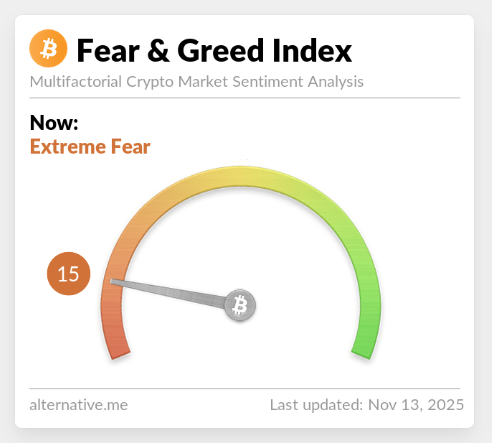
- Fear & Greed Index: Extreme fear often marks good buying opportunities
- Funding rates: Negative funding can signal oversold conditions
- Social media sentiment: Extreme negativity can signal capitulation
- Exchange flows: Large outflows can signal selling exhaustion
How to use them:
Extreme fear combined with oversold technical conditions and cycle positioning can identify quality dip-buying opportunities. But sentiment alone isn't enough. Combine with technical analysis and cycle awareness for better timing.
The contrarian approach:
"Buy when others are fearful" is easier said than done. When markets crash and everyone is panicking, buying requires significant emotional discipline. But these moments often create the best opportunities for prepared investors.
Responsible buy-the-dip strategies
Buying dips can be profitable, but it requires responsible execution. Here are strategies that manage risk while capturing opportunities.
Using dollar-cost averaging during dips
DCA during corrections:
Instead of buying a large amount at once during a dip, use dollar-cost averaging to scale in gradually. This reduces risk if the dip continues and improves your average entry price. For a complete guide on Dollar-Cost Averaging (DCA) in Crypto, including how to implement it during market corrections and combine it with dip-buying strategies, see our detailed article.
How it works:
If Bitcoin drops 20%, instead of buying everything immediately, buy 25% now, 25% if it drops another 10%, 25% if it drops another 10%, and hold 25% in reserve. This approach:
- Reduces risk if the decline continues
- Improves average entry price
- Maintains capital for further opportunities
- Reduces emotional pressure
Frequency:
During significant dips, you might DCA weekly or bi-weekly rather than monthly. This allows you to accumulate more quickly while still managing risk. Adjust frequency based on volatility and your risk tolerance.
Combining with regular DCA:
You can combine regular DCA with dip-buying. Maintain your regular DCA schedule, but increase amounts during significant dips. This captures both systematic accumulation and opportunistic buying.
Scaling into positions instead of buying all at once
The scaling approach:
Scaling means buying in multiple tranches rather than all at once. This approach:
- Reduces risk if the dip continues
- Improves average entry price
- Maintains flexibility to adjust strategy
- Reduces emotional pressure
Example scaling plan:
If Bitcoin drops 20% from $50,000 to $40,000:
- Buy 20% of intended position at $40,000
- Buy 30% if it drops to $35,000
- Buy 30% if it drops to $30,000
- Hold 20% in reserve for further opportunities or exit if support breaks
Adjusting based on context:
Your scaling plan should adjust based on:
- Cycle positioning: More aggressive in accumulation phases, more cautious near cycle tops
- Support levels: Scale more aggressively near strong support
- Fundamentals: More aggressive if fundamentals remain strong
- Capital availability: Scale based on how much capital you have available
Risk management:
Always maintain capital reserves. Don't deploy everything at once. Keep 20-30% in reserve for:
- Further declines
- Other opportunities
- Emergency needs
- Rebalancing
Focusing on high-quality assets (BTC, ETH)
Why quality matters:
Not all dips are worth buying. Buying dips in quality assets (Bitcoin, Ethereum) offers better risk-reward than buying dips in speculative assets. Quality assets have:
- Strong fundamentals
- Proven track records
- Lower failure risk
- Better recovery potential
Bitcoin and Ethereum:
Bitcoin and Ethereum should be your primary dip-buying targets because:
- They have the strongest fundamentals
- They've survived multiple cycles
- They have the highest liquidity
- They're most likely to recover from declines
Avoiding speculative assets:
Don't buy dips in:
- Very small or new projects
- Assets with broken fundamentals
- Projects facing regulatory issues
- Assets you don't understand
The 80/20 rule:
Allocate 80% of dip-buying capital to Bitcoin and Ethereum. Use the remaining 20% for other quality assets if opportunities arise. This ensures you're primarily buying assets with proven track records.
Maintaining liquidity and capital reserves
The liquidity requirement:
Buying dips requires having capital available when opportunities arise. If all your capital is already invested, you can't take advantage of dips. Maintain 10-20% of your crypto allocation in stablecoins or cash for opportunities.
Capital reserves:
Your capital reserves should be:
- Easily accessible (not locked in long-term positions)
- In stable assets (stablecoins, cash)
- Sufficient for meaningful purchases (not too small to matter)
- Part of your overall allocation plan
When to deploy reserves:
Deploy reserves during:
- Significant corrections (20%+ declines)
- Support level tests
- Extreme fear and oversold conditions
- Quality buying opportunities in your target assets
Rebuilding reserves:
After deploying reserves during dips, rebuild them over time through:
- Taking profits during recoveries
- Regular contributions
- Rebalancing when positions grow
- Maintaining discipline to not over-deploy
The discipline challenge:
Maintaining capital reserves requires discipline. It's tempting to deploy everything when you see opportunities. But maintaining reserves ensures you can take advantage of future opportunities and manage risk effectively.
Risk management when buying the dip
Buying dips can be profitable, but it also carries significant risk. Proper risk management is essential for long-term success.
Position sizing and drawdown planning
Position sizing:
Never risk more than you can afford to lose on any single dip-buying opportunity. Position size based on:
- Your total portfolio size
- Risk tolerance
- Cycle positioning
- Quality of the opportunity
Common position sizing:
- Conservative: 5-10% of crypto allocation per dip opportunity
- Moderate: 10-15% per opportunity
- Aggressive: 15-20% per opportunity (only for high-conviction, quality opportunities)
Drawdown planning:
Before buying any dip, plan for further decline. Ask yourself:
- What if prices drop another 20%?
- What if this is the start of a bear market?
- Can I handle the drawdown emotionally and financially?
- Do I have capital to average down if needed?
The mental exercise:
Before buying, imagine the worst-case scenario. If Bitcoin drops another 50% after you buy, can you handle it? If not, reduce your position size. Only buy amounts you can hold through extended declines if necessary.
Diversification:
Don't put all your dip-buying capital into a single opportunity. Spread across multiple quality assets and multiple entry points. This reduces risk if one opportunity doesn't work out.
Avoiding leverage and emotional decision-making
Why leverage is dangerous:
Leverage amplifies both gains and losses. When buying dips with leverage:
- Small further declines can liquidate your position
- You can't wait for recovery if you're liquidated
- Emotional pressure increases significantly
- Risk of total loss is much higher
The rule:
Never use leverage when buying dips. Use only capital you can afford to lose completely. Leverage turns dip-buying from a risk-managed strategy into gambling.
Emotional discipline:
Buying dips requires emotional discipline because:
- You're buying when others are selling
- Prices may continue declining after you buy
- You need to hold through further volatility
- You must avoid panic selling
How to maintain discipline:
- Have a plan: Define your strategy before opportunities arise
- Set rules: Establish position sizes, entry points, and exit rules
- Stick to fundamentals: Focus on quality assets with strong fundamentals
- Avoid social media: Don't let others' panic influence your decisions
- Review your plan: Regularly review and adjust, but don't abandon during stress
The FOMO trap:
Avoid FOMO (fear of missing out) when buying dips. Just because prices are down doesn't mean you must buy immediately. Wait for quality opportunities that meet your criteria. Missing a dip is better than buying a bad dip.
Defining time horizons and exit rules
Time horizon:
Before buying any dip, define your time horizon:
- Short-term: Expecting quick recovery (weeks to months)
- Medium-term: Holding through volatility (months to a year)
- Long-term: Accumulating for cycle positioning (years)
Matching strategy to horizon:
- Short-term: More aggressive entries, quicker exits if wrong
- Medium-term: Moderate entries, hold through volatility
- Long-term: Patient accumulation, hold through cycles
Exit rules:
Define exit rules before buying:
- Stop losses: Exit if support breaks or if you're wrong
- Profit targets: Take some profits at resistance levels
- Time stops: Exit if recovery doesn't materialize within expected timeframe
- Fundamental changes: Exit if fundamentals deteriorate
Why exit rules matter:
Having predefined exit rules prevents emotional decision-making. You're not deciding in the moment whether to hold or sell. You're executing a predetermined plan. This reduces stress and improves decision quality.
Adjusting rules:
You can adjust exit rules based on new information, but do so systematically, not emotionally. If fundamentals change or cycle positioning shifts, update your rules. But don't abandon rules because of short-term price movements.
Common buy-the-dip mistakes
Understanding common mistakes helps you avoid them and execute dip-buying strategies more effectively.
Buying every dip:
Not every price decline is a buying opportunity. Buying every dip, especially in speculative assets, leads to losses. Be selective. Focus on quality assets during meaningful corrections, not every small decline.
Solution: Define criteria for what constitutes a "dip worth buying." Only buy when opportunities meet your criteria.
Buying without preparation:
Buying dips without understanding market context, cycle positioning, or asset fundamentals is gambling, not investing. You're just guessing that prices will recover.
Solution: Prepare before opportunities arise. Understand cycles, identify support levels, research assets, and maintain capital reserves.
Over-leveraging:
Using leverage to buy dips amplifies risk significantly. Small further declines can liquidate positions, preventing you from waiting for recovery.
Solution: Never use leverage. Use only capital you can afford to lose completely.
Buying failing assets:
Buying dips in assets with broken fundamentals or that are failing completely results in permanent losses. Dips in quality assets can recover. Dips in failing assets often don't.
Solution: Focus on Bitcoin, Ethereum, and other quality assets with strong fundamentals. Avoid speculative or failing projects.
Deploying all capital at once:
Buying everything immediately during a dip leaves no capital for further opportunities or averaging down if the decline continues.
Solution: Scale into positions gradually. Maintain capital reserves for future opportunities.
Emotional buying:
Buying based on fear of missing out or panic about missing opportunities leads to poor decisions and bad entries.
Solution: Have a plan and stick to it. Don't let emotions drive decisions. Wait for quality opportunities that meet your criteria.
Ignoring stop losses:
Holding through broken support or fundamental deterioration because you hope for recovery often leads to larger losses.
Solution: Set stop losses and honor them. If you're wrong, exit and preserve capital for future opportunities.
Not considering cycle context:
Buying dips near cycle tops is riskier than buying dips in accumulation phases. Understanding cycle positioning is essential.
Solution: Use cycle indicators and market structure analysis to understand context. Adjust strategy based on cycle phase.
Buying without capital reserves:
If all capital is already invested, you can't take advantage of dip opportunities when they arise.
Solution: Maintain 10-20% of crypto allocation in stablecoins or cash for opportunities.
Checking prices constantly:
Obsessing over daily price movements after buying dips creates stress and temptation to abandon strategy.
Solution: Set a schedule for reviewing positions (weekly or monthly). Trust your plan and let time work.
Final thoughts: Turning volatility into opportunity
Crypto buy the dip strategies can be profitable, but they require preparation, discipline, and risk management. Volatility creates opportunities, but only for investors who are ready.
The key principles:
- Preparation: Understand cycles, identify support levels, research assets, maintain capital reserves
- Selectivity: Not every dip is worth buying. Focus on quality opportunities in quality assets
- Discipline: Stick to your plan, avoid emotional decisions, maintain capital reserves
- Risk management: Position size appropriately, set stop losses, scale into positions
- Patience: Some dips recover quickly, others take time. Be prepared for both
When dip-buying works:
- Quality assets (Bitcoin, Ethereum) during temporary corrections
- When you understand market context and cycle positioning
- When you have capital reserves and can scale in gradually
- When you maintain emotional discipline and stick to your plan
When to avoid dip-buying:
- During extended bear markets without capital to wait
- In speculative or failing assets
- Without understanding market context
- When you don't have capital reserves
- When emotions are driving decisions
Using market intelligence:
Understanding market cycles, sentiment, and technical indicators can help identify quality dip-buying opportunities. Tools that provide cycle positioning, market structure analysis, and sentiment readings can inform your decisions without requiring deep technical analysis knowledge. But remember: tools inform decisions, they don't make them. You're still responsible for risk management and execution.
The long-term perspective:
Successful dip-buying is about accumulating quality assets at better prices over time. It's not about timing every move perfectly. Focus on building positions in Bitcoin and Ethereum during market weakness, and let time and cycles work in your favor. This approach aligns well with crypto for long term investment strategies, where accumulating during market weakness and holding through cycles can deliver significant returns over multiple years.
The bottom line:
Crypto buy the dip can be an effective strategy for building cryptocurrency exposure at better prices. But it requires preparation, selectivity, discipline, and risk management. Focus on quality assets, understand market context, maintain capital reserves, and stick to your plan. With the right approach, volatility becomes opportunity rather than threat.
The question "How do I buy the dip in crypto?" ultimately depends on your preparation, risk tolerance, and ability to execute responsibly. Start with quality assets, understand market cycles, maintain discipline, and manage risk appropriately. With the right approach, buying dips can help you build positions at better prices while managing the unique challenges cryptocurrency markets present.